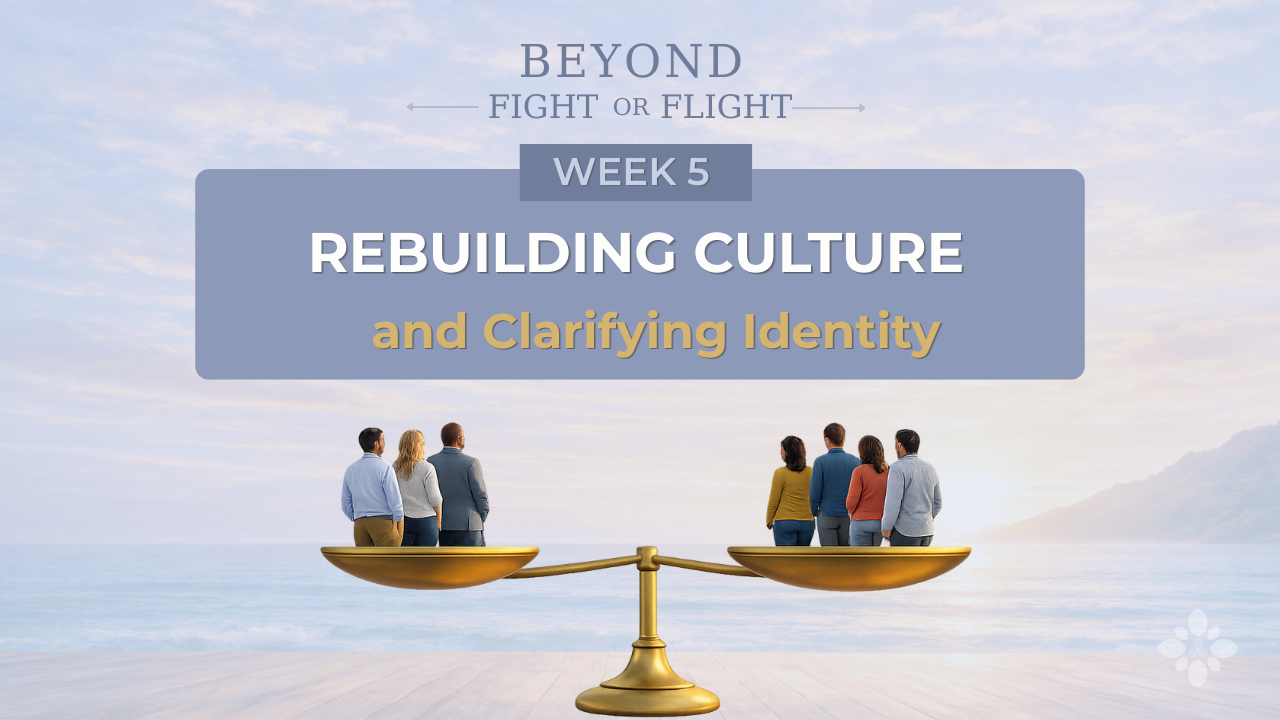
After church conflict, most congregations assume the goal is resolution. But resolution is rarely the finish line—it’s the doorway.
Once tension settles, a deeper question begins to surface:
Who are we becoming now?
In this final week of the Beyond Fight or Flight series, we turn our attention to what comes after conflict—when congregations begin the slow, faithful work of rebuilding trust, clarifying identity, and rediscovering shared mission. As Bill Owen reminds us,
“Resolution settles the moment. Transformation changes the arc of the church’s future.” – Dr. Bill Owen
Healthy churches don’t simply move past disagreement. Hear that again, healthy churches don’t simply move past disagreement.
With intentional leadership and spiritual discernment, they grow through it—becoming more honest with one another, more grounded in their calling, and more aligned with where God is leading next.
Why Resolution Isn’t Enough
Resolution can quiet a room. It can restore cooperation. It can even prevent division. But resolution alone rarely changes a congregation’s culture.
Transformation does something different. It helps a church become more honest, more connected, and more aligned with its mission than before the conflict began.
In Scripture, even the relationship between Jesus and Peter moved through tension toward calling and leadership. Conflict didn’t end the story. It reshaped it.
Congregations can experience the same kind of renewal.
Rebuilding Trust Takes Time
Trust rarely returns quickly after conflict. It grows through small, consistent actions:
- clear communication
- visible leadership presence
- emotional awareness
- reliable follow-through
These practices may seem ordinary. But together they create stability.
Trust doesn’t return all at once. It returns inch by inch.
Relationships Do the Real Work of Healing
Churches sometimes look for step-by-step solutions after conflict. But transformation rarely follows a checklist.
It begins when people start listening differently.
When members hear each other’s stories, curiosity replaces suspicion. When curiosity grows, understanding follows. And when understanding deepens, community strengthens.
Strategies matter. Relationships matter more.
Identity Clarifies the Way Forward
After conflict, many churches discover they need something they never formally named before: a shared sense of identity. Questions like these become essential:
- Who are we called to be?
- How will we treat one another?
- What kind of community are we building together?
Some congregations develop identity statements or behavioral covenants that guide how they live together in seasons of disagreement. These commitments help churches move from reaction to intention.
They also help new members understand what kind of community they are joining.
Mission Turns Healing Into Renewal
Eventually, healthy churches shift their focus outward again.
Conflict naturally turns attention inward. Transformation turns it back outward:
- serving neighbors
- caring for communities
- living the gospel together
Mission reminds a congregation that its future is larger than its disagreements.
When churches rediscover their shared purpose, healing becomes renewal.
Leadership Shapes the Emotional Climate
In every congregation, leaders play a critical role after conflict.
Healthy leaders model what Edwin Friedman described as a less-anxious presence—steady, grounded, and clear about purpose even when tension remains.
This kind of leadership creates space for trust to grow again. And it helps congregations move forward faithfully rather than reactively.
Conflict is never the end of a church’s story.
With wise guidance and intentional reflection, it can become the beginning of a healthier one.
If your church is facing tension, you do not need to have all the answers at once.
This article is part of the Beyond Fight or Flight series from the Center for Healthy Churches. Explore the full leadership guide and practical tools for navigating congregational tension with clarity and confidence.
- Watch Episode 5
- Download the Conflict Transformation 3-Step Leadership Guide
- Talk with CHC about conflict transformation support
And often, the way forward begins with one wise, prayerful, faithful next step.
If your church is navigating what comes after conflict, the Center for Healthy Churches helps congregations rebuild trust, clarify identity, and move forward together.
Learn more: https://chchurches.org
Leave a Reply